
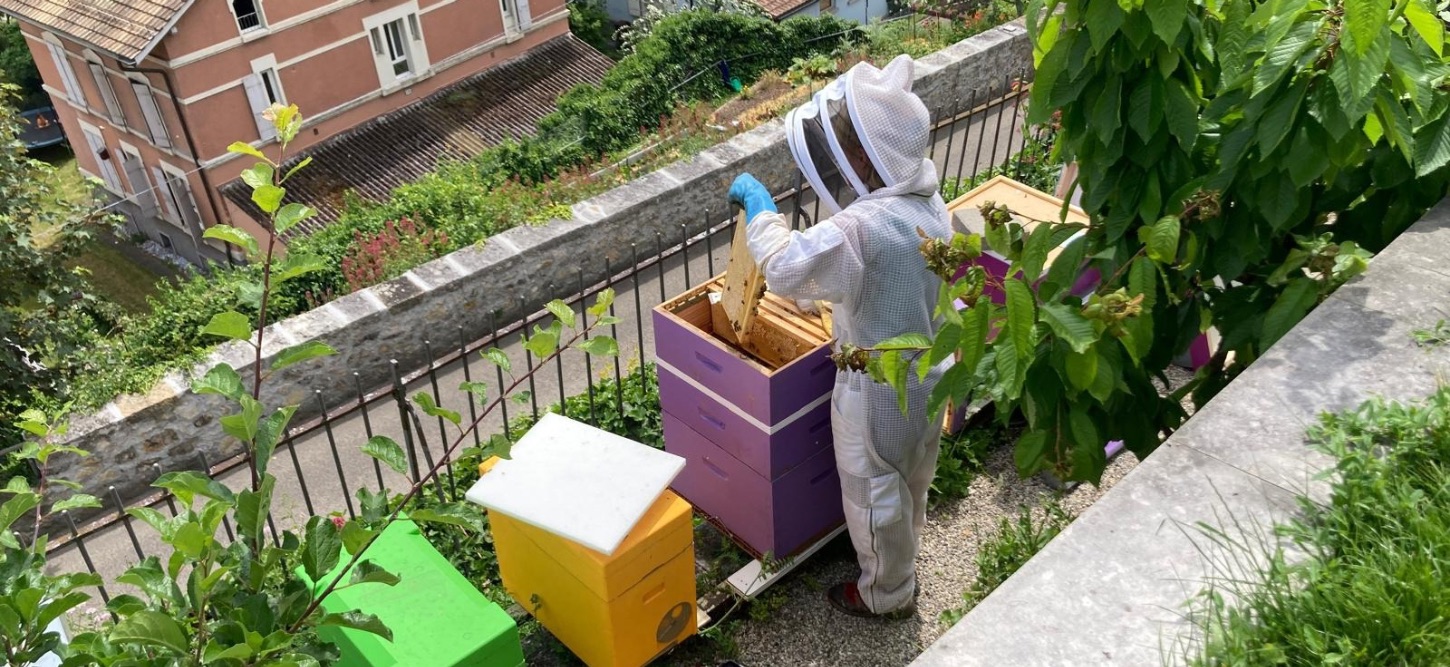
Not all hives are ready to share their honey this early in the season but wow, the hives at my Primrose apiary didn’t hold back this spring! While two of my apiaries still need a bit more time (we’ll be back for the summer honey in about a month), Primrose has been buzzing with activity since early spring. By the end of May, every hive had filled not just one, but two supers!
I’ve just taken the first honey super from these overachieving colonies, the one that was filled first and fully capped by the bees. That’s the telltale sign the honey is mature, with low moisture content and ready to harvest. This is important, because honey taken too soon can ferment if the moisture is too high.
I always leave at least one full super of honey on each hive so they have what they need to make it until the next nectar flow. Many beekeepers pull everything and feed sugar water in the meantime, but I prefer to trust the bees. Besides, how can you really be sure they aren’t storing that sugar water and mixing it into their next batch? No thanks. I’ll wait for the real deal.
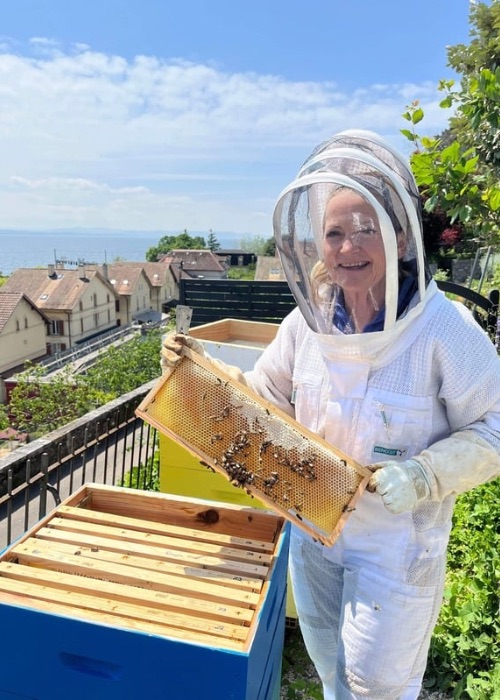
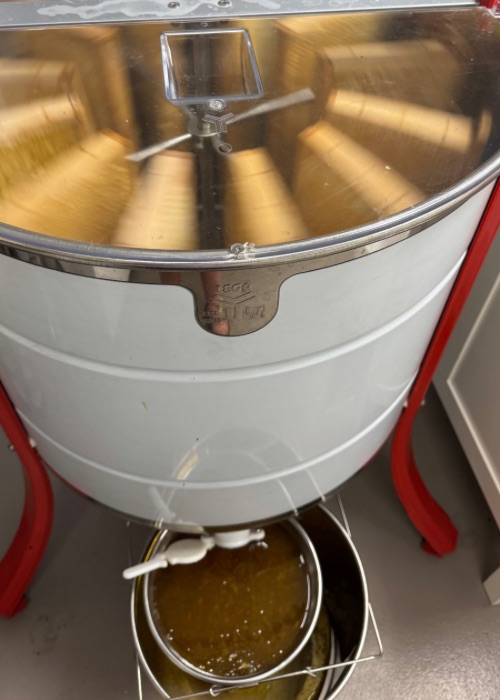
Next up: uncapping the honeycomb frames and spinning them in the extractor. Once the honey flows out, I let it rest in a maturing container so air bubbles, bits of pollen, and wax rise to the top—perfect for scooping into my own personal jars. This top layer, the honey foam, is my guilty pleasure. It’s like a natural marshmallow fluff!
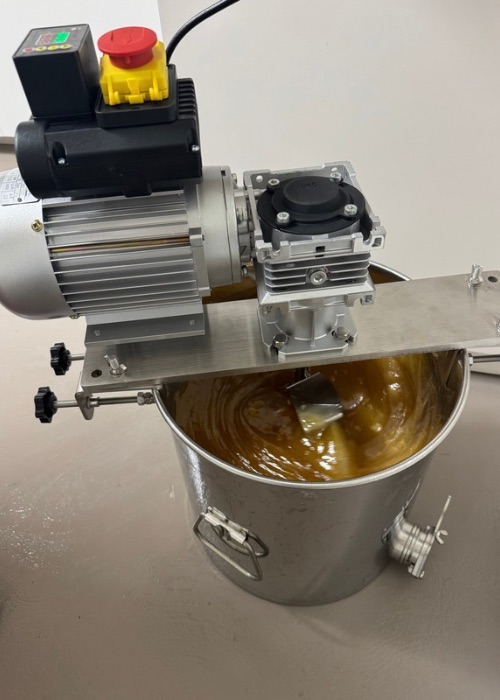
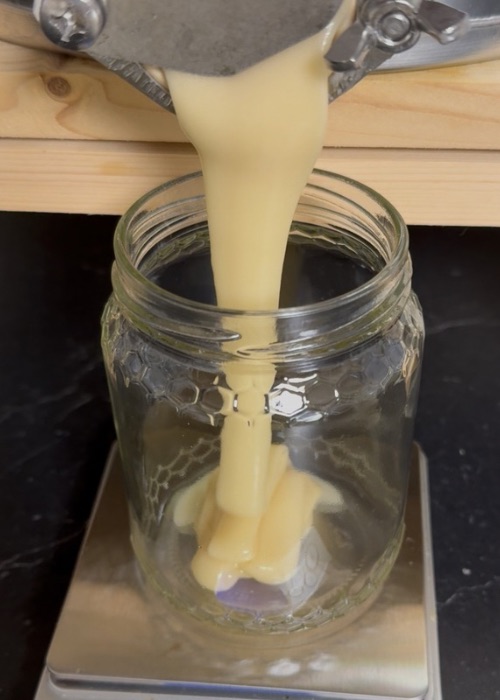
After that, I’ll stir the spring honey to break any forming crystals and turn it into creamy, spreadable magic. This creamed honey is smooth, sweet, and completely irresistible.